
Tuck It, Tie It, Roast It 🔥 : The Ultimate No-Fuss Guide to Trussing Poultry
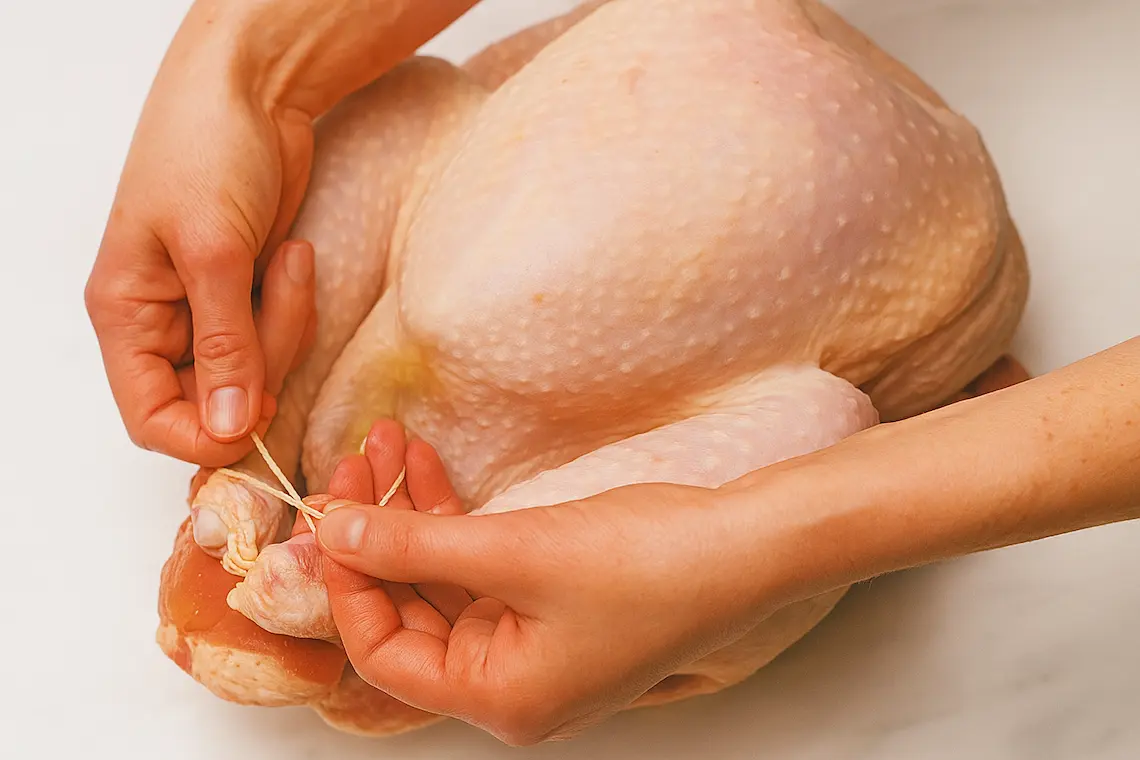
No-Fuss Guide to Trussing Poultry: A Beginner’s Guide to Trussing Poultry.
Ever wondered why your roast chicken looks like it’s doing yoga on the tray while the fancy ones on Instagram sit all elegant and tucked in? That’s because those birds have been trussed, tied up neatly so they roast evenly and look picture-perfect.
Don’t worry, trussing isn’t as scary as it sounds. You’re basically giving your chicken a cozy little hug before sending it into the oven. Let’s break it down the FeastyFit way; fun, clear, and totally doable (even if your last knot was on a pair of sneakers).
🐓 Why Truss at All?
Trussing holds the bird together while it cooks. It keeps the legs and wings close to the body, so everything roasts evenly and stays juicy. It also stops the stuffing (if you’re using any) from falling out like a tragic food explosion mid-roast.
You can use:
- Strong kitchen string (a.k.a. butcher’s twine)
- Poultry skewers if you’re feeling fancy
Pro tip: Always remove the trussing before serving, so no one accidentally cuts into string instead of chicken. 😅
Step-by-Step: How to Truss Like a Pro
🥇 Step 1: For an Unstuffed Bird
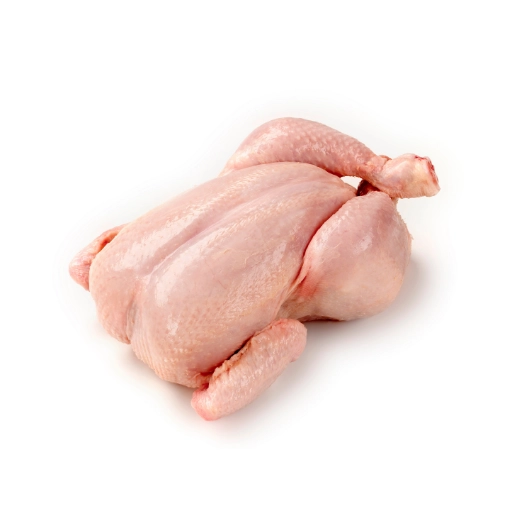
Set your chicken breast down and pull the neck skin flap over the opening.
Turn it breast side up, fold each wing tip back over the neck skin, and tuck it firmly behind the shoulder.
✅ Boom — the wings are snug and your bird looks composed.
🥈 Step 2: Legs Down, Please
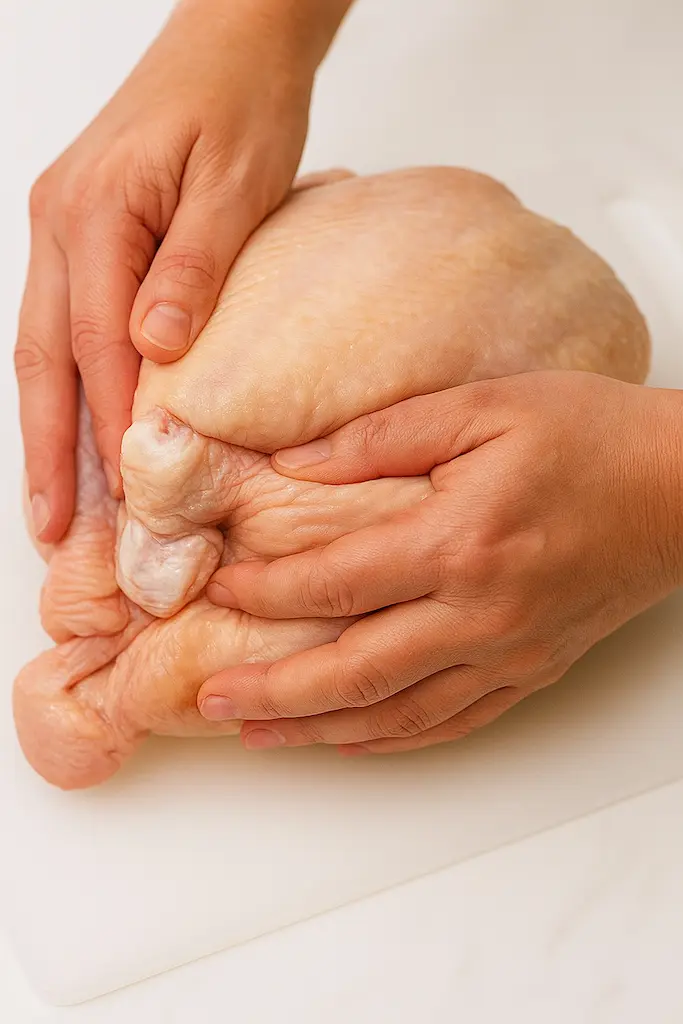
Press the legs firmly against the body.
If your chicken has a handy flap of skin near the tail (called the parson’s nose. Yes, really!), tuck the drumsticks under it.
This keeps things tidy and compact.
🥉 Step 3: Tie Those Legs Together
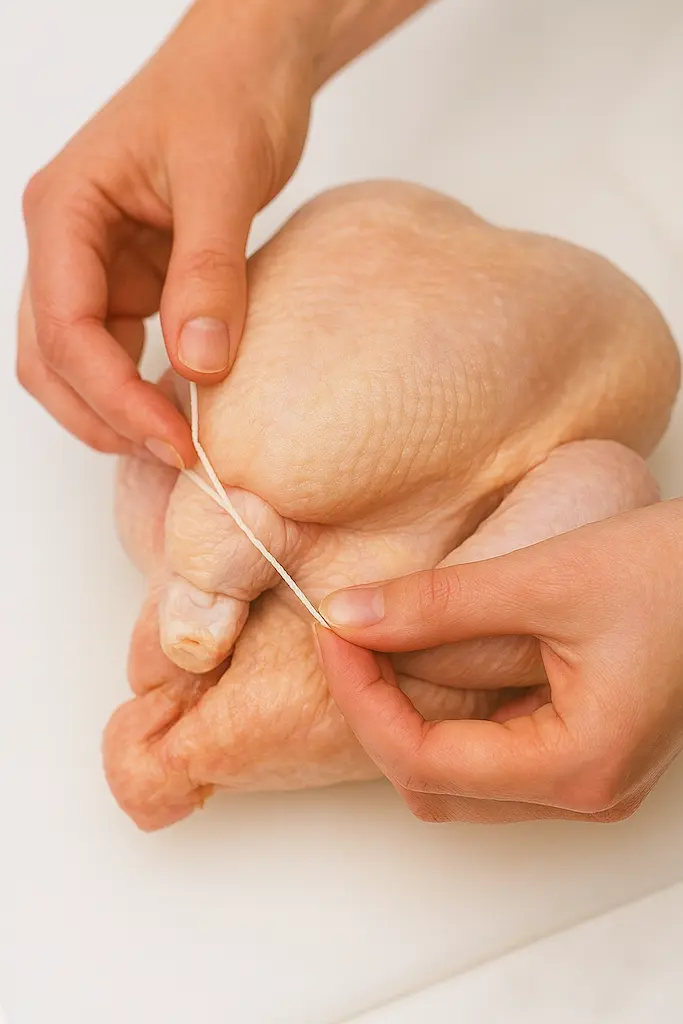
If there’s no parson’s nose, no worries!
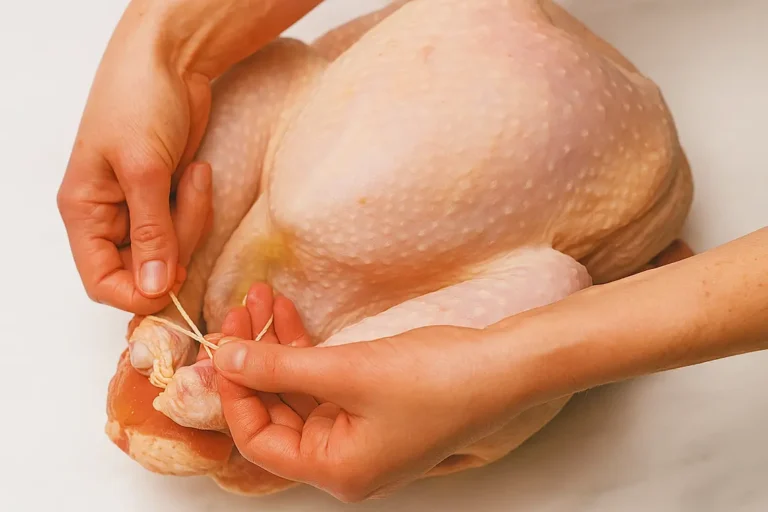
Cross the drumsticks and tie them with kitchen string. Loop it a few times, knot it tight, and snip off any excess.
💪 You’ve officially tied your first bird!
🧈 Step 4: If You’re Stuffing the Bird
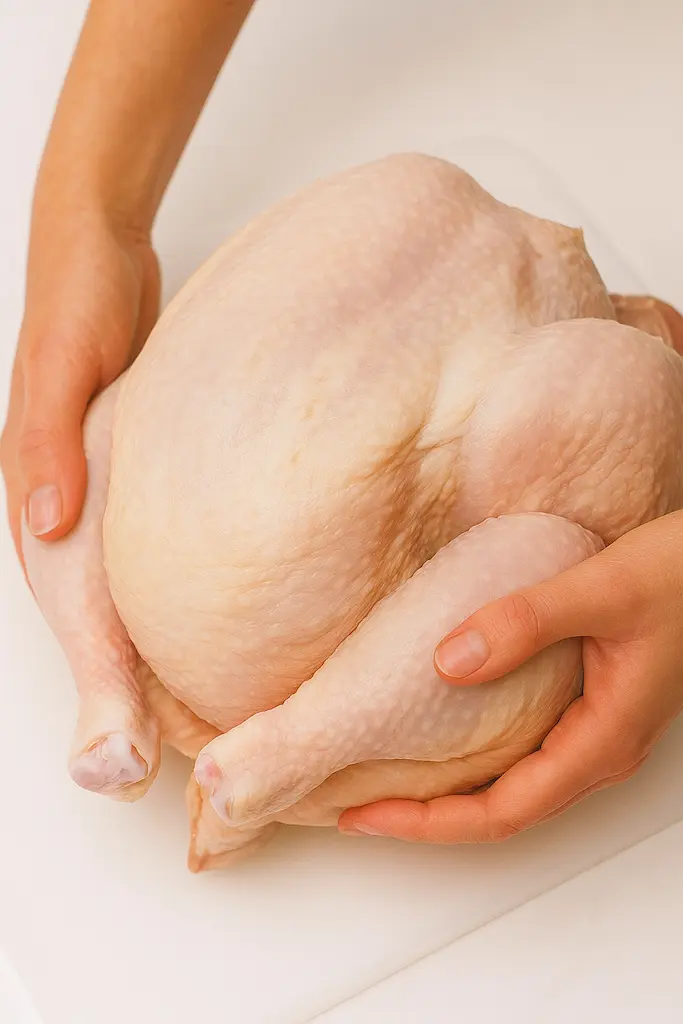
Stuff the cavity lightly (we’ll talk about that in a bit).
Then fold the neck skin flap over the opening and secure it with a skewer or toothpick.
Fold the wings over as before, they’ll help hold everything together.
🌿 Step 5: Add Flavour & Secure
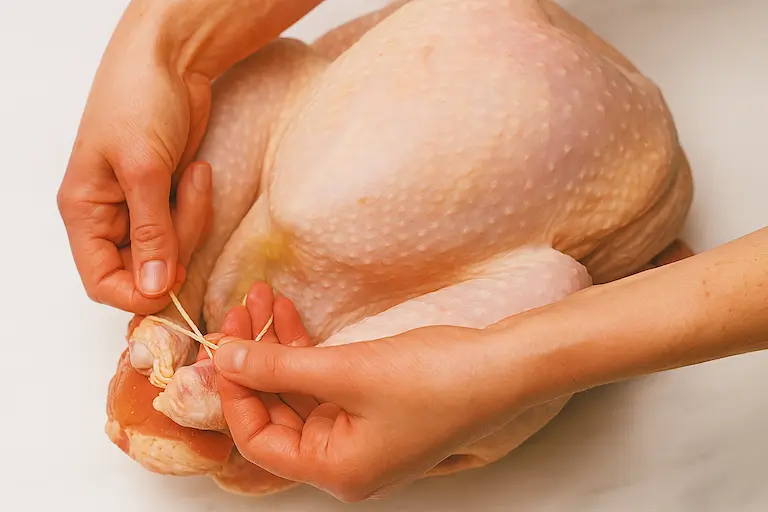
Tuck in your aromatics – lemon halves, herbs, or garlic.
Then tie the drumsticks securely, looping the string through the parson’s nose again if you can.
Think of this as giving your chicken a nice herbal spa wrap. 🌸
🪡 Step 6: Skewer It Shut
If you’re not into tying, you can close the opening with skewers. Just thread two or more through the skin in a zig-zag pattern.
It’s like lacing a shoe, but way more delicious.
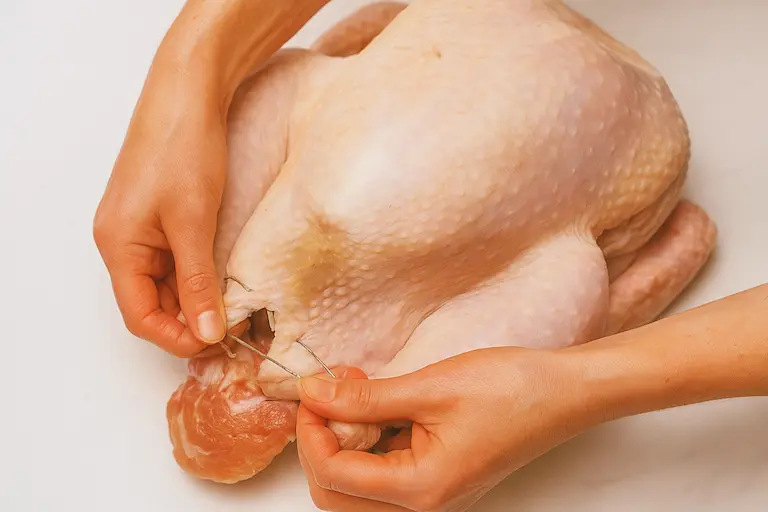
🧶 Step 7: Final Tie-Up
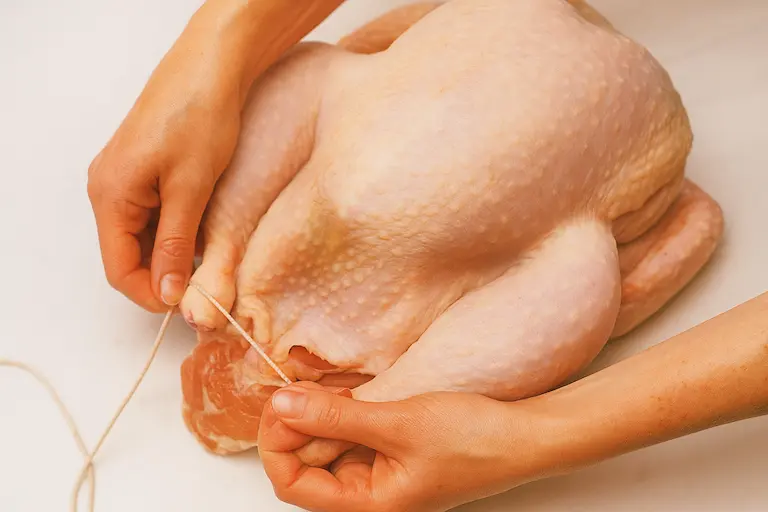
Lace the skewers together with string, tying the drumsticks neatly over them.
Your chicken should now look tight, compact, and ready to conquer the oven. 🔥
Keep these in airtight jars or steel tins in a cool, dry cupboard:
- Always use cool or room-temp stuffing. Never hot or chilled.
- Don’t pack it tight! Leave some room for air to circulate; stuffing expands as it cooks.
- If there’s leftover stuffing, bake it separately (bonus side dish 🎉).
- Never stuff the bird too early, it’s a food safety nightmare waiting to happen.
- And the big one: Don’t overstuff a large bird! That can block heat from reaching the center, meaning bacteria might survive.
🔥 FeastyFit Tip:
If you want crispy, golden skin and juicy meat, trussing is your secret weapon. A loose bird cooks unevenly; dry breasts, under-cooked thighs (no thanks). Truss it right, and your Sunday roast will look like it came out of a magazine.
🧘 Final Thoughts
Trussing is less about perfection and more about keeping things balanced, kinda like life, right? 😉
Once you’ve done it a couple of times, it’ll feel as natural as tying your apron.
So next time you’re roasting a chicken, grab that string and go for it.
You’re not just cooking, you’re leveling up your chef game.
💬 What’s your biggest kitchen “oops” moment? Ever had a chicken unravel mid-bake? Tell us below. We promise not to judge!
One Response