🫕 Why Pressure Cooking Quietly Wins (Most Days)
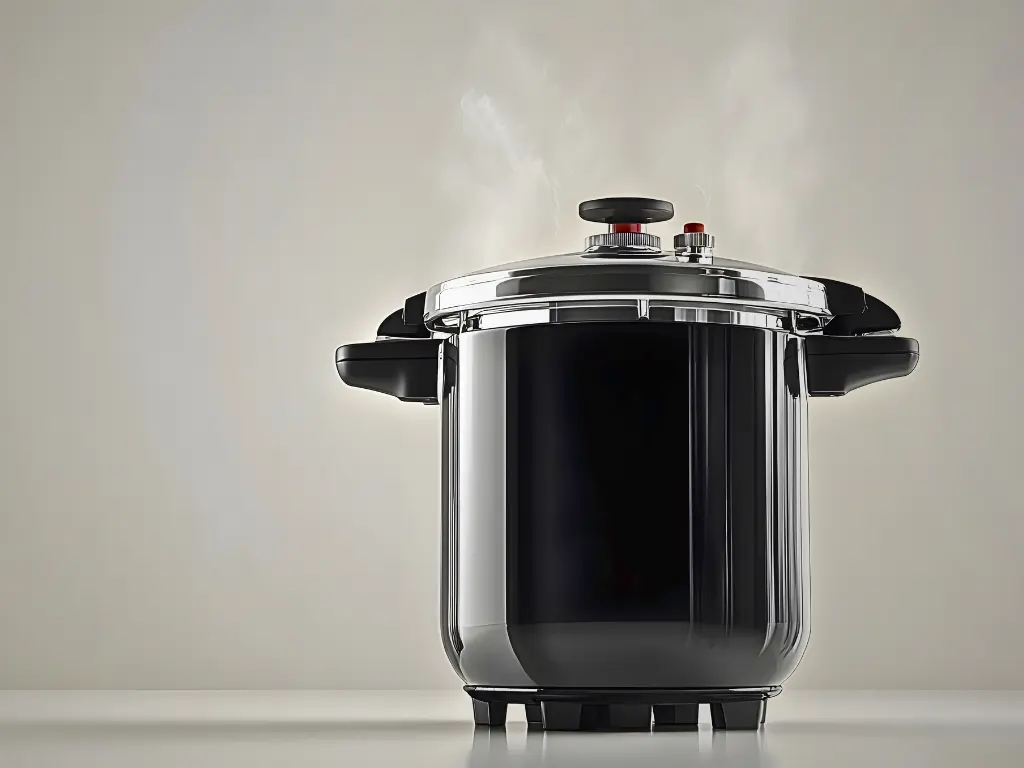
For the longest time, I treated the pressure cooking like a cheat code. Faster dal, Faster chana, even Fatser Curries. You whistle, you wait, you eat. End of story. Somewhere in my head, speed automatically meant compromise. Like… yes it’s quick, but surely something is being lost. Nutrients maybe. Or texture. Or both.
Wok cooking felt honest. Kadhai felt traditional. Slow cooking felt patient and wise. Pressure cooking? Efficient, yes. But a little suspicious.
That thought sat with me for years until one afternoon – half research, half procrastination; I started looking for actual science behind this assumption. Not Instagram science. Not “my nani said so.” Actual data. That’s when I stumbled into two dense, no-nonsense research papers [1](Let’s call it TPC) and [2](Let’s call it PAP) . And suddenly the pressure cooker didn’t look lazy anymore. It looked strategic.
What Pressure Really Does (Beyond Whistles)
Pressure cooking isn’t just about trapping steam and rushing dinner. It changes the environment in which food cooks. Higher temperature, but also less oxygen and significantly less water. That combination matters more than we give it credit for.
In TPC, the researchers looked at pulses- faba beans, lentils, peas; and how different cooking methods altered their phenolic acids and antioxidant activity. Phenolics are not garnish-level nutrients. These are compounds linked to reduced oxidative stress, better heart health, even metabolic support. The thing is, most of them are bound tightly inside plant cell walls.
Pressure cooking breaks those walls quickly. Not gently. Quickly. And that speed turns out to be an advantage.
What's in the article
Faster Doesn’t Mean Rougher (That Was My First Wrong Assumption)
I always assumed longer cooking meant more care. Turns out, time can be cruel. Slow cooking and prolonged boiling expose nutrients to heat and water for much longer. That gives water-soluble compounds plenty of opportunity to escape. Drain the pot, drain the nutrition.
Pressure cooking limits that escape route.
Both TPC and PAP showed that while some phenolic loss happens across all cooking methods, pressure cooking often retains, or even increases the usable phenolics in lentils and peas. Lentils, especially, surprised me. Under pressure, total phenolic content (TPC) in lentils increased significantly compared to boiling or slow cooking.
That means faster cooking, and more accessible antioxidants. That was not the trade-off I expected.
Lentils Behave Differently (And That Matters)
One of the things I appreciated about these studies is that they didn’t generalize pulses as one category. Lentils, faba beans, peas, each responded differently.
Lentils under pressure cooking showed increased reducing compounds and better antioxidant retention compared to traditional boiling. PAP suggests this happens because pressure and microwave cooking break down larger molecules, i.e. starch and proteins – into smaller units with higher reducing power. In simpler terms: nutrients become easier to use.
I reflected on this and it matched my lived experience. Pressure-cooked lentils always felt lighter. I used to think it was placebo. Now I think it was chemistry.
Faba Beans: Not Perfect, Still Respectable
Faba beans are more sensitive. Both papers showed reductions in total phenolics regardless of cooking method. But here’s the nuance: pressure cooking was not the worst offender. Slow cooking often caused greater losses, likely because of prolonged exposure.
Even after reduction, cooked faba beans still retained meaningful antioxidant activity. The studies even suggest consuming them with their cooking liquid to reclaim what leaches out. That detail alone changed how I cook beans now. I don’t throw away broth casually anymore.
The Antioxidant Question (Is Anything Really Lost?)
Another assumption I carried was: cooked food = fewer antioxidants. That’s… incomplete.
Both TPC and PAP used multiple antioxidant assays – DPPH, ABTS, ORAC – and the results varied. Some measures went down. Others went up. Especially in bound phenolic extracts.
Pressure cooking often preserved antioxidant activity better than boiling and competed closely with microwave cooking. Microwave did well in labs, but kitchens aren’t labs. Pressure cooking is more consistent in real homes.
The takeaway wasn’t “pressure cooking is perfect.” It was “pressure cooking rearranges antioxidants, it doesn’t erase them.”
Salt, Sugar, and a Detail I Almost Skipped
One detail from TPC stuck with me. Adding salt or sugar to cooking water raises boiling point slightly. Under pressure, this effect intensifies. Higher temperature, shorter time, faster cell wall breakdown.
Which means nutrients are released, not destroyed.
I’ve salted soaking water instinctively for years without knowing why. Turns out tradition sometimes carries chemistry quietly.
So Is There a Trade-Off?
That was my original question. Faster cooking, but at what cost?
After reading TPC and PAP, and honestly after re-evaluating my own kitchen habits, I don’t think speed is the villain here. Prolonged cooking is. Water overload is. Time without intention is.
Pressure cooking, when done right, aligns with how modern bodies digest. Less gut stress. More accessible nutrients. Less waiting.
I no longer see the pressure cooker as a shortcut. I see it as a controlled experiment happening on my stove.
Fast doesn’t always mean careless. Sometimes it just means precise.
FeastyFit Menu
A notch further of my experiments – one-pot pressure cooking without oil, as fat can be obtained from natural resources itself. Add it to my amazement, these dishes turned out to be very good for both my taste buds and my gut.