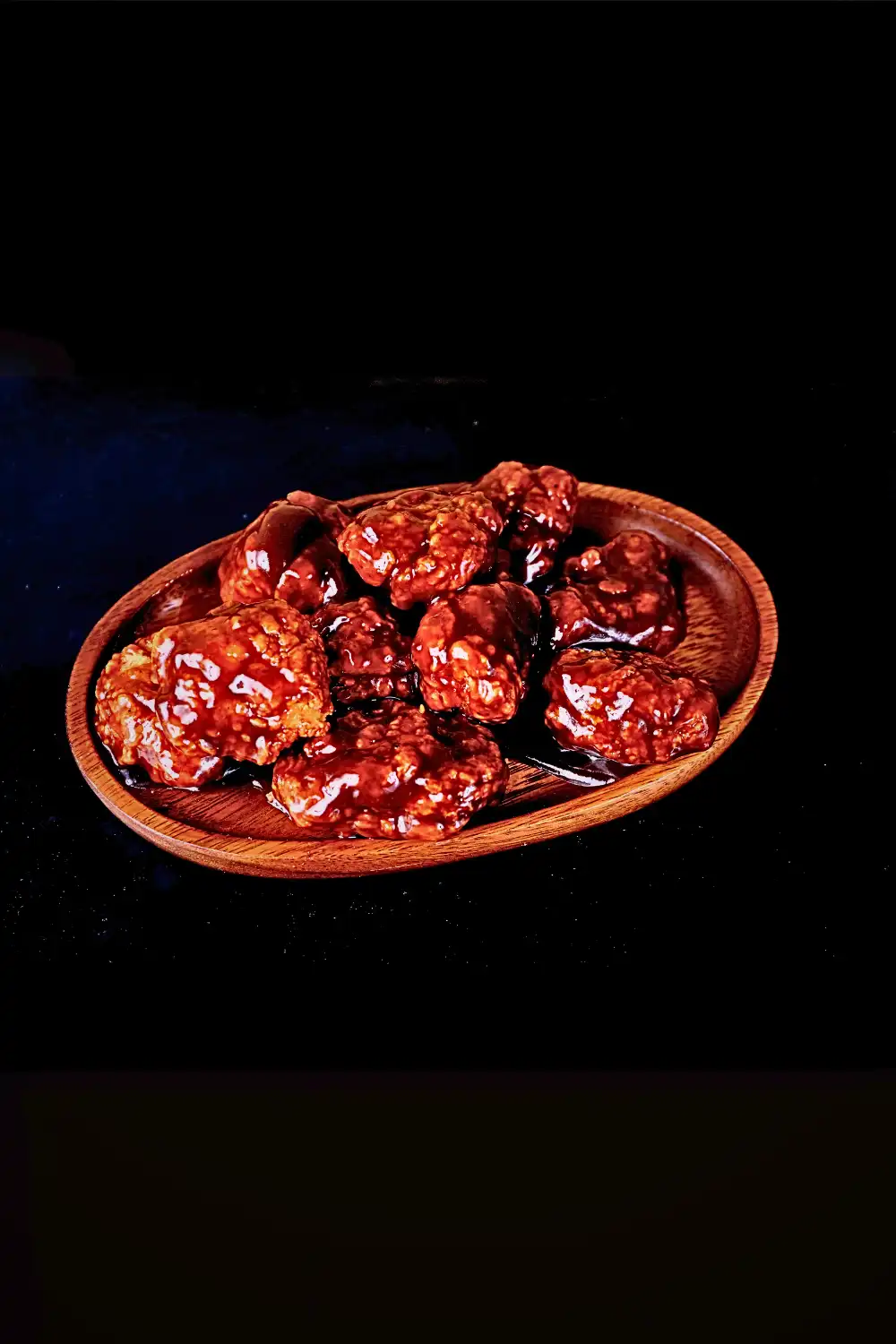
Ingredients
Equipment
Nutrition
Cooking Intructions
Notes
Here are some extra notes:
Chicken Options - Chicken thighs are preferred for juiciness, but you can use chicken breast for a leaner, low-fat version. If using breast, reduce cooking time slightly to prevent drying out.
Spice Control - Gochujang has a natural heat. If you prefer a milder version, reduce gochujang to 2 tablespoons and increase honey by 1 tablespoon. For extra kick, add ¼ teaspoon cayenne pepper or a pinch of chili flakes.
Honey Variations - Use regular honey + a few drops of hot sauce if hot honey isn’t available. Maple syrup or agave can also work if you want a different sweet balance.
Oven Tips - Keep a close eye during broiling. Gochujang has natural sugars that caramelize quickly and can burn. Line your tray with foil for easy cleanup.
Serving Suggestions - Serve with steamed rice, quinoa, or cauliflower rice for a balanced meal. Also pairs beautifully with cucumber salad or pickled veggies to cool down the heat.
Make-Ahead & Storage - Cooked chicken can be stored in the fridge for up to 3 days. Reheat in an oven or air fryer for best crispiness (avoid microwave for texture).
The sauce can be made ahead and stored separately for 1 week.
Diet-Friendly Adjustments -
- Low-carb/Keto: Replace honey with sugar-free hot honey or a blend of erythritol + chili flakes.
- Gluten-Free: Ensure your gojuchang paste is gluten-free (some brands use wheat).
- Low-sodium: Skip the extra salt and use unsalted butter.
